Healthy, Wealthy and Wise

The Environmental Links to Breast Cancer

Tuesday, June 23rd, 2009

Listen to my June 17th interview on Progressive Radio Network with Dr. Sabrina McCormick, sociologist, documentary filmmaker and author of the new book “No Family History: The Environmental Link to Breast Cancer.”

We talk about the fact that while billions of dollars have gone toward researching treatments for breast cancer, very little money has gone toward studying prevention. She tells the fascinating story of how the pink ribbon promotion actually got started. We also discuss how mainstream cosmetic companies are raising millions of dollars for breast cancer and at the same time selling lipstick that contains ingredients linked to breast cancer and other illnesses.

The show aired on Progressive Radio Network: http://greer.progressiveradionetwork.org/

Here’s the link on my site: http://supernaturalmom.com/media-room/

It’s also up on iTunes under Super Natural Mom, if you want to listen to it on your iPod.

Share this post. Tweet it, Digg it, Email it, etc. Click an icon below.

  • RSS
  • Twitter
  • Facebook
  • del.icio.us
  • Digg
  • Google Bookmarks
  • StumbleUpon
  • Technorati
  • Print
  • email

Honey Laundering

Monday, March 16th, 2009

I love honey. I love that it is a natural product that has been around forever. So, I found it upsetting to learn that much of the honey sold in stores is contaminated with antibiotics like Chloramphenicol, which is banned by the FDA. US bee keepers aren’t using antibiotics, but two-thirds of the honey Americans eat is imported and almost half of it, regardless of what’s written on the label, comes from China. This was reported in the Seattle Post Intelligencer, which did an investigation.

The creepy thing is that truck loads of foreign honey come into the US from Canada, for example, and even though the label says “Made in Canada”, much of it actually comes from China. It’s been reported that contaminated Chinese honey was used in food products including products sold by Sara Lee, Smucker’s, and even packed into individual servings for the Ritz Carlton Hotel chain. In addition, large amounts of tainted Chinese honey was shipped back to China, where it was then shipped to Australia and other countries and relabeled as from those countries of origin.

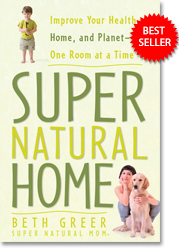
As I say in my book Super Natural Home, it’s best to buy local whenever you can, and that goes for honey as well. I buy raw honey from my local farmer’s market. It comes straight from the hive and is not heated, which can kill health-enhancing enzymes. I use it to treat burns, help with summer allergies and as a sweetener in my chai. It also makes an excellent natural preservative. I hear it was found in ancient tombs and was determined to still be edible!

Share this post. Tweet it, Digg it, Email it, etc. Click an icon below.

  • RSS
  • Twitter
  • Facebook
  • del.icio.us
  • Digg
  • Google Bookmarks
  • StumbleUpon
  • Technorati
  • Print
  • email

Cell Phones and Kids: Not a Safe Combination

Friday, December 7th, 2007

Studies from around the world are now being released with some startling news about using cell phones. A Swedish study reports that radio waves from mobile phones penetrate deep into the brain not just around the ear. Researchers found that using your cell phone for 10 years or longer will double the risk of getting an acoustic neuroma – a tumor on a nerve connecting your ear to your brain – and children, because they have thinner skulls than adults and nervous systems that are still developing, are particularly vulnerable to it.

But it’s not only long term use of cell phones that’s of concern; short-term use also can have adverse effects. Scientists at the Spanish Neuro Diagnostic Research Institute in Marbella have discovered that a call lasting just two minutes can alter the natural electrical activity of a child’s brain for up to an hour afterwards. Doctors fear that disturbed brain activity in children could affect their mood and ability to learn and lead to psychiatric and behavioral problems.

Britain’s advisory body on radiological hazards, the Health Protection Agency has urged parents to limit their children’s use of cell phones, recommending that younger children use cell phones only in emergencies. But, here in the U.S. there are no precautionary guidelines and toy companies are teaming up with wireless companies and going after kids as young as five. For example, LeapFrog’s “TicTalk” and Mattel’s “My Scene” sell simple phones with five speed-dial buttons – kind of a cross between a phone and a pager. As kids get older and are exposed to more advanced phones, they’ll surely be pressuring parents for an upgrade.

Even my 10-year-old daughter, who goes to a Waldorf-inspired school where electronic gadgets are discouraged, asks regularly for her own cell phone. She’s making her case by naming all the kids she knows (there are many) who have them. I’ve told her not until the manufacturers make them safer to use. Also, I’m aware that kids aren’t just using their phones to talk. They’re text messaging, taking pictures, playing video games and surfing the Web, which opens up a whole new set of concerns.

Cell phones have certainly become a big part of life. There are over three billion of them in use on our planet. According to a 2005 survey by the ad agency BBDO Worldwide, 75 percent of American cell phone owners had it turned on and within reach during their waking hours, 59 percent wouldn’t think of lending their cell phone to a friend for a day, 26 percent said it was more important to go home to retrieve a cell phone than a wallet. About half of American teens aged 13-16 have a cell phone and now companies have their sites set on 9- to 12-year-olds, or ‘tweens, as the next untapped market for cell phone use. But before you’re persuaded to go out and buy your child a cell phone, think twice before hooking them up.

According to Dr. Joseph Mercola, aside from the increased risk of a brain tumor, the following problems can occur with long-term cell phone usage:

Damage to cell membranes
Decreased intracellular communication between cells which impairs bodily functions
Increased deposits of heavy metals into your cells, which increases the production of free radicals. This can decrease cellular production of energy thus making you overly fatigued
Increase in childhood autism

Plus, according to the Environmental Protection Agency (EPA), Americans discard 125 million phones each year, creating 65,000 tons of waste. These old phones – many containing hazardous materials like lead, mercury, cadmium, flame retardants and arsenic – are now the fastest growing type of manufactured garbage in the nation.

It’s not realistic or practical to give up our cell phones, but here are some suggestions on using them more safely:

Use a headset, whenever you or your child uses a cell phone.

Limit your child’s use of a cell phone to essential purposes only and keep the calls short.

Use a speaker phone whenever possible.

It’s probably best to keep your cell phone away from your body – do not clip it on your belt or put it in your pocket. Instead put it in your purse or backpack.

Never hold an infant while talking on your cell phone because its skull can absorb radiation easily.

Switch off your phone when you go to sleep to reduce EMF (electro magnetic field) exposure.

Before making a call check the number of bars that indicate reception – a good signal means that the phone is using less radiation to transmit.

Charging your phone creates a high level of radiation, so charge it in another room.

Consider attaching a chip or shield to your phone to reduce the effects of EMR (electromagnetic radiation). Several companies offer these and can be found online.

Share this post. Tweet it, Digg it, Email it, etc. Click an icon below.

  • RSS
  • Twitter
  • Facebook
  • del.icio.us
  • Digg
  • Google Bookmarks
  • StumbleUpon
  • Technorati
  • Print
  • email

Making Sense of Scents

Tuesday, November 13th, 2007

If you are buying scented air fresheners and household cleaning products, chances are you are exposing yourself to chemicals that are bad for you. For example, The NRDC (Natural Resources Defense Council) recently found that 12 out of 14 popular air freshener brands contained phthalates, chemicals that can cause hormonal abnormalities, birth defects and reproductive problems. The National Academy of Sciences (NAS) reports that “95 percent of the ingredients used to create fragrances today are synthetic compounds derived from petroleum, including benzene derivatives, aldehydes, and many other known toxins and sensitizers.”

Most of us, unwittingly, buy such products containing ingredients that are either poorly studied, not studied at all, or are known to pose potentially serious health risks. Of the roughly 17,000 chemicals found in common household products, only 3 in 10 have been tested for their effects on human health. Why? Because the U.S. Consumer Product Safety Commission does not require manufacturers to test household cleaning products before they appear on store shelves.

While it shouldn’t be assumed that because an item is on the shelf it has been tested for safety, you also shouldn’t assume that if it says “natural” it’s safe. The word “natural” is undefined and unregulated by the government and can be applied to just about anything. So, if you’re standing in the grocery isle holding what appears to be a natural, nice-smelling cleaner for example, know that its label provides only limited information at best. According to the Children’s Health Environmental Coalition, a national nonprofit that educates the public on environmental toxins that affect children’s health, labels often omit inactive or inert ingredients that can make up as much as 90 percent of a product’s volume. These include solvents, dispersal agents, dyes and fragrances, some of which can pollute the air and water. Other ingredients that are not mentioned can be carcinogens or worsen existing health problems like allergies and asthma. And because no standards exist, claims like “eco-safe” and “environmentally friendly” are also meaningless, says the Consumers Union.

Here are some ways to keep you and your family safe from dangerous, artificially scented household products:

  • Use products with scents from natural or botanical sources or labeled as essential oils. These are different from fragrance oils which are created with synthetic chemicals. Examine the list of ingredients to check that the word “fragrance” does not appear.
  • Scented candles may release mercury and other toxins into the air you breathe. Candles that have shiny metal wicks are made of lead which can be released into the air and turn into dust that settles on you and your furniture. Try unscented soy or beeswax alternatives, or those scented with essential oils.
  • Avoid scented aerosol sprays, liquids that emit a continuous scent, and solid air fresheners. Instead, use: a non-aerosol citrus spray containing only citrus peel extracts, an open box of baking soda, essential oil on a piece of cotton or in a diffuser, or try opening a window.
  • Fabric dryer sheets and potpourri that list “fragrance” on the label mean that synthetic chemicals were used, and they should be avoided. A non-toxic alternative to dryer sheets: put one or two drops of an essential oil on a washcloth and put it in the dryer with your laundry.
  • Since only food and herbs can be certified organic, the word “organic” on the label of a scented dish or laundry soap, for example, doesn’t mean much.
  • Most conventional dish and laundry detergents are made from petroleum, a nonrenewable synthetic resource, so look for naturally derived or plant-based formulas that are biodegradable and contain no phosphates.
  • Choose “non-chlorine bleach” cleaning solutions and scouring powders. Fumes of cleansers containing a high concentration of chlorine can irritate the lungs, which is dangerous for those with asthma, emphysema or a heart condition. The risks are compounded when the cleansers are used in small, poorly ventilated rooms, such as the bathroom. Fragranced chlorine bleaches are even worse because the odor is disguised, which can lead to dangerous overexposure.
  • White vinegar, borax, salt, herbs, olive oil, cornstarch and lemon juice have been used as cleansers for decades and have proved to be effective and safer for humans, pets and the environment.
  • Recipes to make environmentally safe cleansers from oven cleaners to mildew removers can be found online at: www.care2.com, www.almanac.com (hit the Food button, then scroll down to “Kitchen Tips and Tricks” and click on the “helpful advice and handy kitchen hints link”) and www.organizedhome.com.
  • Information about safe cleaning products can be found at: www.greenhome.com, www.checnet.org (Children’s Health Environmental Coalition), www.householdproducts.nlm.nih.gov and www.kidsorganics.com/Chemicals%20to%20Avoid.htm.
  • You can find environmentally safe products from Bon Ami, Ecover, Seventh Generation, BioShield, Earth Friendly and Greenwood Naturals, a lavender-based essential oil product produced by EO Products.

If all this seems overwhelming, think about just one “healthy” scented cleaning product you can purchase today and commit to buying it. This small, simple act could have a major effect on you and your family’s health.

Share this post. Tweet it, Digg it, Email it, etc. Click an icon below.

  • RSS
  • Twitter
  • Facebook
  • del.icio.us
  • Digg
  • Google Bookmarks
  • StumbleUpon
  • Technorati
  • Print
  • email

This Halloween: Know Where Your Chocolate Comes From

Saturday, October 13th, 2007

Sure the costumes are cute, and the house decorations clever, but let’s face it, for kids, Halloween is all about the candy. If you’re like me, and your kids bring home way too many treats, you might want to consider mailing the chocolate ones back to Nestlé, M&M/Mars and Hershey. Why? Because, according to media reports, these and other chocolate makers buy cocoa from plantations that use child slaves in the harvesting of cocoa beans. The reports have unveiled stories about boys, as young as 9 years old, who were tricked or sold into slavery, to work on cocoa plantations in the Ivory Coast (Cote D’Ivoire) in West Africa. This small country is the world’s major supplier of cocoa, providing 43% of the world’s supply.

The International Labour Organization, part of the United Nations, estimates that 284,000 child laborers work on cocoa farms, most of them in the Ivory Coast. “These children are either involved in hazardous work, unprotected or unfree, or have been trafficked,” says the ILO.

About five years ago Senator Thomas Harkin (D, Iowa) led an investigation into allegations of child slavery in the African cocoa trade. The senator introduced legislation that would have required chocolate sold in the U.S. to be labeled “slave-free.” The bill was not enacted, but Nestlé got the message. The company, other big chocolate producers, the ILO and nonprofit groups like Anti-Slavery International, Save the Children, and UNICEF, signed an agreement promising that by July 2005 they would find a way to eliminate child slavery in cocoa production by certifying chocolate as not having been produced by any underage, indentured, trafficked or coerced labor.

The deadline passed and not much was accomplished. Chocolate makers have started a foundation to work with nonprofits to rehabilitate and educate child laborers. But the industry’s own assessment of its “progress to eliminate the worst forms of child labor and forced labor from the cocoa fields” was “discouraging,” reads a statement from Harkin’s office. Nestlé and others say they need more time – three years to certify half the cocoa-growing areas of Ivory Coast and Ghana.

Nonprofit groups like Global Exchange and the International Labor Rights Fund founded by a Methodist minister and funded in part by George Soros’ Open Society Institute, are now suing Nestlé’s U.S. subsidiary, together with commodity traders Archer Daniels Midland and Cargill, in California. The suit charges Nestlé, Cargill and ADM with making false claims to the public that the problem of child slave labor on cocoa farms was being resolved.

There is something you can do: Buy Fair Trade chocolate. Under the Fair Trade system, yearly inspections certify farms as slavery free and guarantee them a fair price for their beans. The chocolate costs a bit more, but since poverty is at the root of chocolate slavery, fairer prices are one key to ending both. Buy Fair Trade, and you send a message to chocolate makers that you’d rather pay more than hurt children.

Organic chocolate, sold by companies like Newman’s Own and Dagoba, is also slave free since organic farms are subject to their own independent monitoring system that checks labor practices. Here’s a list of other chocolate makers who are either organic, Fair Trade or use slave free chocolate:

  • Ben and Jerry’s Ice Cream
  • Endangered Species
  • Green and Blacks
  • Lake Champlain
  • Land O’Lakes Hot Chocolate
  • LaraBar
  • Rapunzel
  • San Francisco Chocolate Factory
  • Scharffen Berger
  • Trader Joe’s Fair Trade Cocoa and their Organic Chocolate Bars
  • Whole Foods Private Label Chocolates

Last Halloween, in my desperate attempt to get rid of most of the candy my daughter had gathered in her treat bag, I resorted to a ploy that will probably work best on kids 9 and under. I told the tale of the Sugar Fairies, which goes something like this: “There are children in the world who don’t get to eat candy because they’re too poor or they don’t celebrate Halloween in the country they live in. So let’s gather all the candy you’ve collected, minus the most special ones you can’t live without, and put them into a separate bag. When you go to sleep, the Sugar Fairies will come and take the candy and deliver it to all the needy children.”I can tell you from experience, it works! I unloaded miniature Snickers, 3 Musketeers, Milky Ways, untold numbers of Jolly Ranchers, M&Ms, Reese’s Pieces, candy corn, Tootsie Rolls and Nerds. My daughter got to keep10 pieces she wanted to eat over time and the rest went into a bag which was tied onto her bedroom door before she went to bed. (I made sure our dog didn’t have access to it!) That night while she slept, I emptied the contents of the bag into the trash and in its place I enclosed a thank you note from the Sugar Fairies, along with some toys like jacks, squishy balls, glow-in-the-dark insects, spooky fingers, stickers, and a couple of rubber worms and spiders.

In the morning we both felt great – me for not having all that candy in the house (which, after all, is also tempting for me and my husband), and my daughter for having some cool toys to play with and thinking she did something good for other children. Hopefully this year there’ll be some Fair Trade chocolate to choose from and we can all enjoy one of life’s sweet indulgences.

Share this post. Tweet it, Digg it, Email it, etc. Click an icon below.

  • RSS
  • Twitter
  • Facebook
  • del.icio.us
  • Digg
  • Google Bookmarks
  • StumbleUpon
  • Technorati
  • Print
  • email

Safe Makeup

Thursday, September 13th, 2007

By the time you walk out the door in the morning, after slathering, and spritzing yourself with toner, moisturizer, eye cream, foundation, blush, eye shadow, eyeliner, mascara, lipstick, gloss and perfume, you may have put enough chemicals onto your body to be hazardous to your health. Many of the chemicals in makeup have been linked to cancer, hormone imbalances and skin irritation.

According to the Environmental Working Group, a nonprofit environmental research organization, which conducted an assessment of more than 1,000 cosmetic brands, less than 1 percent are made from ingredients that have all been evaluated for safety. “Some products contain carcinogens, reproductive toxins and other chemicals that may pose health risks,” notes the group’s website.

The Food and Drug Administration does not review cosmetic ingredients for their safety before they come to market, nor does it have the authority to recall hazardous products.

“Women face daily and widespread exposure to hundreds of chemicals linked to breast cancer, and reducing — or even understanding — this environmental contamination might do as much as screening or treatment to reduce a woman’s risk of getting the cancer,” says a report in the journal Cancer by Susan G. Komen for the Cure and the Silent Spring Institute. (May 2007)

According to the Campaign for Safe Cosmetics, a program that helps raise awareness about cancer-causing chemicals in cosmetics, the average consumer (including teens) uses 15 to 25 cosmetic and personal-care products a day. These contain about 200 chemicals that have been added to preserve, dye and emulsify the products. Some are the same chemicals used in industrial manufacturing to soften plastics, clean equipment and stabilize pesticides.

One widely used group of synthetic chemicals, parabens, are used as antimicrobial preservatives in more than 13,000 cosmetic products. The Environmental Protection Agency states that all parabens — methyl, propyl, and butyl — have been proved to interfere with the function of the endocrine system, and these endocrine disruptors are stored in our body’s fatty tissues. The Center for Children’s Health and the Environment at Mount Sinai School of Medicine in New York says endocrine disruptors have been suspected of contributing to reproductive and developmental disorders, learning problems and immune system dysfunction in children.

This is especially alarming considering that young girls are starting to use cosmetics earlier and more often. According to a 2004 cosmetic industry report by market research firm Mintel International Group, 90 percent of 14-year-old girls say they use makeup. The survey revealed that 63 percent of 7- to 10-year-olds now wear lipstick; more than 2 in 5 girls in that same age group wear eye shadow or eyeliner, and almost 1 in 4 uses mascara.

The European Union recently passed a law banning the use of suspected CMRs — carcinogens, mutagens or reproductive toxins — in any cosmetics sold in the 25-member EU. The major U.S. cosmetics companies that sell abroad have to reformulate their products to conform to EU safety guidelines, but most haven’t changed the formulas they sell here. Avon, the self-proclaimed “company for women,” hasn’t yet signed the Compact for Safe Cosmetics, a pledge to remove carcinogens and other harmful ingredients from beauty products.

However, last September, bowing to pressure from environmental groups and European lawmakers, Orly International and OPI Products, two top beauty-salon brands, started selling reformulated nail polishes without the chemicals dibutyl phthalate (DBP, a plasticizing ingredient used to increase flexibility in nail polishes), formaldehyde and toluene, which have been linked to cancer and birth defects.

Health advocacy groups say that when it comes to chemicals that affect human health and the environment, better safe than sorry should be the guiding principle.

Reading labels won’t always help you avoid these chemicals because the beauty industry doesn’t always disclose every ingredient in its products. For example, phthalates are rarely mentioned on labels, so there’s no way to tell whether they’ve been used. Phthalates keep your mascara from running, stop your nail polish from chipping and help fragrances linger. There’s evidence that exposure to phthalates can harm the development of fetuses and children. According to the Breast Cancer Fund, hundreds of animal studies have shown that phthalates can damage the liver, kidneys, lungs and the reproductive system, primarily of male offspring.

Health Care Without Harm, an umbrella organization of dozens of environmental and health groups, lab-tested 72 cosmetics by major brands such as Revlon, Calvin Klein, Christian Dior and Procter & Gamble and found phthalates in 52 of their products. The best way to protect yourself is to read labels (use a magnifying glass if necessary!) and be suspicious: Words like “natural” or “hypoallergenic” look reassuring, but they’re basically meaningless. The FDA has no control over these labels. Products called “natural,” for instance, may include synthetic dyes and fragrances. “Hypoallergenic” just means that the most common irritants are left out, but other problematic chemicals might still be in the mix.

“Fragrance-free” or “unscented” means a product has no odor, but synthetic ingredients are often added to mask odors. Products without the word “fragrance” on their label should be OK. Cosmetics labeled “organic” must contain 70 percent or more organic ingredients (grown without the use of pesticides), but read the ingredient list carefully. It’s important to choose products from trusted cosmetic and body care companies that use natural, certified organic, nontoxic and non-synthetic ingredients.

Look for these companies in your local health food store, or online: Juice Beauty, Grateful Body, Max Green Alchemy (MGA), Dr. Hauschka, Jurlique, Iredale, PeaceKeeper Cause-metics, Gabriel, Zuzu, Burt’s Bees, Lavera and Pomega5.

While chemicals in any one product are unlikely to cause harm, here’s the bottom line: We are repeatedly exposed to synthetic chemicals from many sources each day. So even a small change, like switching to a nontoxic lipstick, might make a difference in your health.

According to the Safe Cosmetics Campaign, avoid the following chemicals in cosmetics whenever possible:

  • Butyl acetate
  • Butylated hydroxytoluene
  • Coal tar
  • Cocamide DEA/lauramide DEA
  • Diazolidinyl urea
  • Ethyl acetate
  • Formaldehyde
  • Parabens (methyl, ethyl, propyl and butyl)
  • Petrolatum
  • Phthalates
  • Propylene glycol
  • Sodium laureth/sodium laurel sulfate
  • Talc
  • Toluene
  • Triethanolamine

Share this post. Tweet it, Digg it, Email it, etc. Click an icon below.

  • RSS
  • Twitter
  • Facebook
  • del.icio.us
  • Digg
  • Google Bookmarks
  • StumbleUpon
  • Technorati
  • Print
  • email

Eggs Aren’t All They’re Cracked Up to Be

Monday, August 13th, 2007

It’s not so simple to buy eggs anymore. Choices abound, from organic, cage-free, farm-raised, free-range, omega-3, biodynamic, local, pastured, fertilized, vegetarian, and natural, to the other end of the spectrum – irradiated. Then there’s shell color: white, brown, speckled, and if you’re lucky enough to find them, blue. What’s an omelet-eating, soufflé-making, frittata-loving, eggs-over-medium person to choose?

According to the USDA, all eggs are “natural.” The term “cage-free” is a misnomer. It only means the chickens are not put in small cages but instead are put into big enclosures with no outdoor access. “Free-range” and “free roaming” means the chickens have access to the outdoors. But, here’s the U.S. Department of Agriculture’s definition of these terms (in its entirety): “Producers must demonstrate to the Agency that the poultry has been allowed access to the outside.” In other words, there has to be a door, and it has to be open at least part of the time.

“Organic” means hens ate organic feed, and were not given antibiotics. Typically, they too, are raised in confinement. The same is true for chickens fed vegetarian feed. Most supermarket eggs are produced on what is known as factory “farms” with sometimes close to 500,000 birds in one facility. The birds are caged in buildings that are artificially lighted and ventilated. The feed is generally a mixture of conventionally grown (sometimes genetically modified) corn and soy, and often laced with antibiotics.

Many commercial egg producers add synthetic colorants to their feed to mimic the bright yellow yolks of eggs from pastured hens. A widely used additive called canthaxantin has been shown to cause damage to the retina of the eye in humans, according to the European Union. Farmed-raised salmon are also fed canthaxantin to add color to their flesh. Due to public pressure, labels on farmed Atlantic salmon must now include the words “artificially colored” or “color added,” on their labels. However, no such label appears on conventional egg cartons.

Eggs from chickens raised on pasture (not pasteurized!) seem to be the healthier choice. They are different from supermarket eggs, both in flavor and nutrition. The chickens are not de-beaked like most commercial layers, and they have access to grass and insects. Studies show that their eggs are higher in omega-3 fatty acids, vitamin E, and vitamin A and are lower in total fat, saturated fat, and cholesterol. The eggs are usually laid just days before you get them and are rich-tasting with beautiful bright orange yolks (what the birds eat determines the yolk color).A new report reveals that eggs from these hens are higher in lutein and zeaxanthin than eggs from chickens raised in confinement. These are natural substances similar to beta-carotene that protect your eyes from cataracts and macular degeneration. They may also protect against cancer and cardiovascular disease.

In its desire to protect consumers from salmonella bacteria, the government recently passed a law saying it’s safe to irradiate eggs. But studies show that irradiated eggs are lower in vitamin A and niacin — FDA officials admit that eggs lose 24 percent of their vitamin A when exposed to just one-third the level of radiation the agency approved. The risk of eating a tainted egg is actually low if you look at the 2002 study by the U.S. Department of Agriculture. It showed that of the 69 billion eggs produced annually, 2.3 million of them were contaminated with salmonella. According to Mercola.com, if you are purchasing your eggs from healthy chickens this infection risk reduces dramatically because only sick chickens lay salmonella-contaminated eggs. If you are obtaining high quality organically fed, pasture-fed eggs, the risk virtually disappears.

Most of the premium or “natural” eggs in your supermarket are not from chickens raised on pasture, so where can you find them? At your local farmer’s market and from producers listed on the website Eatwild.com. How can you know whether the eggs you are about to buy are fresh and have come from healthy chickens, or are old and have come from poorly fed, stressed birds? The only way to know is to look closely and ask questions.

Here are some tips from the Weston A. Price Foundation: The shells should be dull, not shiny. The eggs should feel strong, not so delicate that regular handling threatens to crack them. Once you get them home you can perform two more freshness tests: Place them in a large bowl of cold water; if they float, they are old. Unshelled onto a plate, the yolk of a truly fresh egg will dome up and stay up, and the white will clearly be thicker in the middle part, thinner on the edges. Mercola.com advises that to properly judge the freshness of an egg, it needs to be at room temperature, then check it by rolling it across a flat surface. Only consume it if it rolls wobbly. Also, if there is a crack in the shell, don’t eat it.

On a recent trip to the San Rafael Farmer’s Market near San Francisco, I bought a lovely dozen with colors ranging from pale to deep brown, and some blue ones from Araucana chickens. (The breed determines the shell color.) You can find them from several vendors with prices that range from $3.50 to $8 a dozen (gulp!) but know you are getting a nutritionally superior egg with a rich taste, as well as a more ethically produced food. Personally, I’d rather eat eggs from chickens that are not caged. I prefer locally grown produce, both for environmental reasons and to support our local farmers.

Share this post. Tweet it, Digg it, Email it, etc. Click an icon below.

  • RSS
  • Twitter
  • Facebook
  • del.icio.us
  • Digg
  • Google Bookmarks
  • StumbleUpon
  • Technorati
  • Print
  • email

My Farmer

Friday, July 13th, 2007

Most of us have our own doctor, dentist, and lawyer – so why not a farmer? Many locally owned farms offer fresh, organic fruits and vegetables, eggs from free roaming chickens and beef that has been raised on a green pasture instead of in a crowded, manure-filled feedlot.

According to Michael Pollan, author of the bestseller The Omnivore’s Dilemma, most Americans are only dimly aware that their food represents their most profound engagement with the natural world. “Health problems such as obesity, food poisoning (including mad cow disease), heart disease, and many others are connected to the way we grow our food,” says Pollan.

In generations past most people had a direct connection with the natural world and agriculture where their livelihoods depended on food and other goods produced from the land. As recent as 100 years ago, four-fifths of the world population lived in rural communities and were in some way dependent on agriculture for their living. Even in the 1970’s it is estimated that half of the world’s working population was still employed in agriculture. With industrialization, large numbers of people moved to cities and lost their connection with the land.

Now, most of us go to the market, see the word “Organic” and think the product probably tastes better, has no pesticides or chemical additives, and is therefore a healthier choice for us and our children. But, what’s the environmental impact of the food we buy, even organically grown food? Where did the food come from and how much energy was used to get it to your market? Trucking or flying food in from around the country and the world uses a lot of petroleum. Michael Pollan says that the food industry burns nearly a fifth of all petroleum consumed in the U.S. He calls Wal-Mart, Safeway and Trader Joe’s “Industrial Organic,” where most of its produce comes from a few huge suppliers…even as far away as New Zealand and China. The Washington Post reported that large farms account for only 7 percent of the total number of farms but they produce 60 percent of agricultural output.

So, if you’re health-conscious as well as ecologically minded, you may want to venture out and find your farmer. According to Business Week, the local farmer is emerging as a new celebrity. Why not become part of this important movement? Go to the farmers’ market and talk to the farmers directly. Ask if they use pesticides or synthetic fertilizers. Most are an interesting, committed bunch of people. Or better yet, head directly to a farm near you.

Check out eatwellguide.com, an online directory of sustainably raised meat, poultry, dairy and eggs; eatwild.com, which lists local suppliers for grass-fed meat and dairy products; and heritagefoodsusa.com, which sells mail-order “traceable” products from small farms whose labels provide details about how they were produced.

Another way to connect with a farmer is to join a C.S.A. or “community supported agriculture” farm. The idea for CSAs was originally conceived in the 1920’s by Austrian philosopher Rudolf Steiner. Before the growing season, you buy shares in a farm, and during the season you, the “shareholder,” get a weekly box of fresh, seasonal vegetables, (sometimes eggs and meat), herbs and fruit at the peak of ripeness. They are selected by the farmer and either delivered to your door or collected from a drop-off point.

Pollan says that eating from the C.S.A. box “constitutes the very opposite of industrial eating, that sort of unconscious consumption based on our desire to eat whatever we want whenever we want it — tomatoes in January, strawberries in October — food that’s been cleaned, cut up, processed, cooked, everything but chewed and digested for us.”There are now more than 1500 CSAs in the U.S. To find a C.S.A. near you, go to localharvest.org or csacenter.org.

The challenge is that you have to learn to cook creatively with the rhythms of the seasons and not just with a shopping list. For example, in winter there might only be kale, Swiss chard or collard greens available. And what about that funny looking gnarly brown ball called celeriac? I’ve avoided it for years until I discovered it tastes really great in soup.Remember to eat local, eat seasonal and go “beyond organic.” It definitely takes effort, but the rewards can be tremendous. By actively supporting our dairies, farms and ranches, it will help retain the exceptional quality of life we have here in America.

Share this post. Tweet it, Digg it, Email it, etc. Click an icon below.

  • RSS
  • Twitter
  • Facebook
  • del.icio.us
  • Digg
  • Google Bookmarks
  • StumbleUpon
  • Technorati
  • Print
  • email

It Really Bugs Me

Wednesday, June 13th, 2007

Imagine picking a fruit or vegetable from your garden, spraying it with bug spray, and then handing it to your child to eat. Does that seem absurd? Well, that’s exactly what we do each day with store-bought non-organic produce. The chemicals are invisible, odorless and tasteless. We do it because most of us are unaware. For example, the teenage daughter of a friend of mine babysat for my eight year old for the first time the other night. I felt comfortable leaving my child with her; I told her to please feel free to help herself to any food she wanted in my refrigerator or pantry. The next day I touched base with her mom who said all went well, except that her daughter had phoned her from my home and exclaimed: “Mom, everything in their kitchen is organic. It’s so weird!” I was stunned that a 16 year old would find a kitchen filled with healthy, organic* food to be weird and then I realized that “weird” to a teenager usually means something they haven’t seen before, or been told about.

So, here are the top three reasons to choose organic fruits and vegetables:

  1. Pesticides are pervasive. Those juicy strawberries now being displayed in the market may look luscious, but they have a dark side. Their red color has been enhanced by a fungicide and they have been infused with methyl bromide, a gas that is injected by tractor into their growing soil. These substances then become part of fruits’ flesh, and can’t be washed off.
  2. Organic foods have a higher nutritional value and can help fight disease in our body. An organically grown apple has 300% greater Vitamin C and 61% greater calcium content than a conventional or non-organic apple. Also, the amount of calcium in organic spinach is 7 times greater than in non-organic spinach and the potassium is an astounding 117 times greater in the organic. In addition, researchers found that organic fruits and vegetables have significantly higher levels of cancer-fighting antioxidants than conventionally grown foods.
  3. Pesticides are toxic to us and the environment. A recent study from Mount Sinai Medical Center in New York, found that women with high levels of DDE (a derivative of DDT) in their blood were four times as likely to develop breast cancer as women with low levels. Pesticides are known to harm the human neurological system as well as depleting the Earth’s protective ozone layer leading to more skin cancer.

Warning: peanuts, peanut butter, and coffee have the largest concentration of pesticides of any food.

Given all these facts, why do farmers still use pesticides? Well, mostly it’s because they believe it will save more crops from insects, weeds and disease. But that’s not true: before the 1950s, farmers lost about a third of their crops each year, and today, with over 21,000 pesticide products to choose from and pesticide costs exceeding $4 billion a year, farmers still lose the same – one third of their crops!

So what can you do?

  • Be an Aware Consumer: Be aware of the high toxicity levels of non-organic fruits and vegetables. Remember that pesticides can disrupt the endocrine system and be carcinogenic as well. Know, for example, that the FDA detected 30 different pesticides on the strawberries they sampled over a two year period; apples had 36 pesticides.
  • Make Eating Organic Produce a Habit: Go to Whole Foods, The Good Earth, or other health food markets, or buy at local farmers markets (ask your friends or go on the Web to:http://www.cafarmersmarkets.com/findMarkets for a full directory.
  • Be sure you understand the vocabulary in this game: “conventional” means pesticides were used; “Free range” or “free-roaming” or “all natural” are meaningless. “Organic” means 95% of the product contains no pesticides; “100% Organic” means none of the product contains any pesticides. By the way, if “organic” prices frighten you, you might try planting your own garden, or buy a share in a nearby community farm (to find one, go to www.sare.com).
  • Begin with the foods that you and your family are consuming in the greatest quantities. For kids, consider switching to organic baby food, strawberries, rice, milk, bananas, peanut butter and apples. Avoid giving children large amounts of the foods with the highest toxicity scores: Since their immune systems are more susceptible to the adverse effects of pesticides, it is especially important to make sure that your children eat as many natural and organic foods as possible.

Maybe as we become better informed and more aware of what we eat, we can pass this information along to our children and the good stuff won’t seem so “weird.”

*The term “organic” refers to food that is grown and processed in a practical, ecological partnership with nature, without the use of synthetic pesticides, fertilizers or herbicides. Organic foods are minimally processed with no artificial ingredients, preservatives or irradiation. And they taste better! Produce is sent to market as close to harvest as possible and may have suffered less nutritional loss by the time you eat it.

Share this post. Tweet it, Digg it, Email it, etc. Click an icon below.

  • RSS
  • Twitter
  • Facebook
  • del.icio.us
  • Digg
  • Google Bookmarks
  • StumbleUpon
  • Technorati
  • Print
  • email

Squeaky Clean, But Is Your Soap Safe

Friday, April 13th, 2007

Most of us don’t realize how the chemicals in the bottles that are lined up on our sinks and shower stalls impact our health. For example, here’s a dirty little secret about soaps and shampoos: most that are commercially made contain chemicals called parabens used as antimicrobial preservatives. The Environmental Protection Agency states that all parabens – methyl, propyl, and butyl – are endocrine disruptors. In other words, they interfere with the function of the endocrine system (the thyroid, pituitary, adrenal glands, pancreas, ovaries and testes) which regulate hormones. The Center for Children’s Health and the Environment at Mount Sinai School of Medicine in New York says that endocrine disruptors have been suspected of contributing to reproductive and developmental disorders, learning problems (like ADD), and immune system dysfunction.

Another widely used synthetic chemical, DEA or Diethanolamine, which is found in many shampoos and personal care products, has been shown to interfere with normal brain development in baby mice when applied to the skin of pregnant mice, say researchers at the University of North Carolina at Chapel Hill. “I don’t believe any woman who’s been using these products needs to have a sleepless night about having caused harm to her child,” said Steven Zeisel, M.D., Ph.D., professor of nutrition and associate dean of research in the School of Public Health at UNC. Zeisel added, “But it would probably be prudent to look at labels and try to limit exposure until we know more.” In the meantime, more than 100,000 tons of DEA are sold in the U.S. each year. It is used as a wetting or thickening agent in shampoos and hand soaps. Other names for DEA include Diethanolamine and Diethanolamide.

Stop and think about how many chemicals might be in all the personal care products you use every day from shampoo, conditioner, soaps, toothpaste, deodorant, sunscreen, skin cream, lotions, perfume, etc. It is unknown what happens when we are repeatedly exposed to minute amounts of them from combined sources. In addition, when you bathe, whatever chemicals that aren’t absorbed by your skin, are washed down the drain and might not be broken down in the water treatment process. Persistent concentrations of hormones, antidepressants, and antibiotics end up in our waterways and our drinking water says the U.S. Geological Survey.

Our municipal drinking water typically has 100 or so pharmaceutical medicines and personal care products in “significant concentrations.”It’s such an important issue that the EPA’s Office of Research and Development designed The Strategy Plan 2000, which makes identifying the risks of pharmaceutical and personal care products (PPCPs) one of its top five goals for protecting human and ecological health.And then there’s the issue of antibacterial soaps. According to Johns Hopkins University research, about 75% of a bacteria-killing chemical that people flush down their drains survives treatment at sewage plants, and most of that ends up in sludge spread on farm fields. Every year, the study says, an estimated 200 tons of two compounds – triclocarban and triclosan (found in antibacterial soaps and toothpaste) – are applied to agricultural lands nationwide. Toxicological tests have shown that these chemicals seem safe for human exposure, even in the high doses applied to skin. However, in water, triclosan can react with chlorine and turn into chloroform and dioxins which are linked to cancer. In other words, if you are brushing your teeth with toothpaste that has triclosan in it, and you are rinsing with tap water that has chlorine in it, you might be getting a little chemical reaction right in your mouth!

Previous research from John Hopkins suggested that triclocarban was among the top 10 contaminants in waterways, while triclosan was among the most prevalent in a national analysis of streams by the U.S. Geological Survey.

An independent federal advisory panel announced recently that popular antibacterial soaps and washes offer no more protection than regular soap and water. The panel, which advises the Food and Drug Administration, said by an 11-1 vote that it saw no added benefits to antibacterials when compared with soapy hand washing. Panelists also said soaps that use synthetic chemicals could contribute to the growth of bacteria that is resistant to antibiotics.

Faced with this unsettling information, don’t be tempted to throw up your hands and wonder “what can I really do about this?” The best thing to do is keep it simple: Read labels – bring a magnifying glass with you to the store if necessary – and buy products without all the added chemicals. Brad Black, Co-CEO of EO, with its factory in Northern California, has reformulated his line of soaps, shower gels, shampoos and conditioners in the distinctive dark blue bottles. “We have removed parabens from all our products,” he said. “We are a locally owned company with a conscience that is striving to make a high quality, safe product.”

Other companies with clean products include Eco-Dent Toothpowder, Dr. Bronner’s, Shikai, Ecco Bella, Wen Haircare, Avalon and Pharmacopia.You probably won’t find these products in most commercial markets, so look for them at health food stores and places like Whole Foods, online, and at your local farmer’s market.

Share this post. Tweet it, Digg it, Email it, etc. Click an icon below.

  • RSS
  • Twitter
  • Facebook
  • del.icio.us
  • Digg
  • Google Bookmarks
  • StumbleUpon
  • Technorati
  • Print
  • email